For our Co-op last semester, we were learning about the seven continents and the students are giving presentations of their own choosing. My son decided to focus on folktales from each continent and explore story telling. For Australia he chose to make a little booklet of "Crow Steals Fire."
OCEANIA/AUSTRALIA
This continent was the most difficult to find folktales from. Even the collections of folktales from around the world often exclude Australia and sometimes the islands in Oceania are grouped together with Asia or South America instead of Australia (did you know Easter Island is part of Oceania??). The folktales exist, of course, but picture books and collections seem to be harder to come upon, especially if you want a copy in good condition, or if you're being picky like I was and really, really wanted a trickster tale. Wikipedia assures me that Crow is a trickster god of Australia folklore, so why are there no picture books of him? Get on that, picture book writers!!!
When the world was young : creation and pourquois tales / retold by Margaret Mayo ; illustrated by Louise Brierley. A Polynesian tale featuring Maui (see more below), and an Australian tale help make this collection unique. This was an amazing find, considering all the trouble we had finding tales from Oceania!
The Turtle and the Island: A Folktale from Papua New Guinea
Rainbow Bird: An Aboriginal Folk Tale from Northern Australia
Whale's Canoe
Why Koala has a Stumpy Tale
One Day in the Eucalyptus, Eucalyptus Tree by Daniel Bernstrom is more like a modern folktale, but it's a great picture book and follows the structure of folktales as a boy tricks a snake into eating too much so that it will have to spit him out.
And then, of course, there's the Hawaiian/Polynesian hero, Maui, much like in the Disney movie Moana. Although Hawaii is politically part of the USA which is in the North American continent, Hawaii is culturally part of the Polynesian islands, which are often lumped in with Australia as "Oceania," and sometimes lumped in with Asia in folktale collections.
Pele and the Rivers of Fire is a picture book that tells the story of the volcano goddess in the movie and has great reviews.
How Maui Slowed the Sun
Maui and the Secret of Fire
Hina
Hina and the Sea of Stars
Naupaka
For older kids, Hawaiian Myths of Earth, Sea, and Sky looks good. Here is a brief summary of a few Hawaiian legends. You can also find Legends of Maui on the gutenberg project, which means its free, but it is also a bit dry and written for adults.
We had a little luck finding a few videos on youtubes, too:
The Blue Wren
Why Koala Has a Stumpy Tale
How Kangaroo Got Its Pouch
Tiddalick the Frog
Pele Searches for a Home
Why Maui Snared the Sun
Menehune and the Birds
Stay tuned for South America! Join my Reader's Club to keep up with posts like these and other content.
Friday, July 14, 2017

Friday, June 30, 2017
Folktales from Around the World: Africa
For our Co-op last semester, we were learning about the seven continents and the students are giving presentations of their own choosing. My 7yo son chose to perform a puppet show based on Anansi and the Moss-Covered Rock by Eric A. Kimmel. We had SO much fun prepping for this - making puppets (yay, sewing!), and reading a slew of folktales from Africa - SO much fun that we decided to focus on folktales from each continent and explore story telling.
I've made a post for each continent except Antarctica (few people there) and Europe, because we ALL know great stories from Europe and there are a million wonderful picture books, as well as collections and research that's easy to find. (Look up the Aarne-Thompson Folktale Types to start down the rabbit hole!). We're talking the three little pigs, stone soup, and nearly every Disney movie, for better or worse.
Anyway. Here's Africa!

My absolutely favorite - Anansi and the Magic Stick by Eric A. Kimmel. Kimmel's books are favorite Anansi books, hands down. Funny with gorgeous illustrations and great text flow. See Anansi Goes Fishing, Anansi's Party Time, and Anansi and the talking melon by Kimmel, Eric A.
If you look into the history of Anansi, you'll find quite a bit of material because the stories followed African slaves to other parts of the world. I first heard Anansi tales voiced by Denzel Washington and I'm thrilled that you can still get these today on a CD.
Zomo The Rabbit: A Trickster Tale from West Africa by Gerald McDermott is another great picture book--not surprising since Gerald McDermott has retold other folktales from around the world with his lively illustrations. I recommend them all. This particular story invokes three impossible trials which is a common theme for folktales across cultures.
Next we stepped up our research with Nelson Mandela's Favorite African Folktales. These tales come from all over Africa and have a higher reading level than Kimmel's picture books. Each tale is a few pages of text like the Grimm's fairytales I remember reading in upper elementary. The folktales are accompanied by great full-page illustrations and many include songs and poetry elements. You can also buy the audiobook for charity and find activities at http://www.mandelasfavoritefolktales.com/
Beat the Story-Drum, Pum-Pum by Ashley Bryan retells five traditional Nigerian tales in a style great for read-aloud, showing the beauty of oral tradition.
Plays from African Tales: One-Act, Royalty-Free Dramatizations for Young People, from Stories and Folktales of Africa by Barbara Winther. Great for actors who can memorize a few lines of script and understand the plot of longer folktales.
Egyptian Cinderella by Shirley Climo. Did you know that the original Cinderella may have been a real woman who married Pharo Amasis II? Egypt spans the continents of Africa and Asia. I've placed this story here because supposedly Aesop was a friend of Rhodopis (Cinderella) and he was originally from Africa. So, it's a good opportunity to talk about cultures influences one another.
Stay tuned for Oceania/Australia! Join my Reader's Club to keep up with posts like these and other content.
I've made a post for each continent except Antarctica (few people there) and Europe, because we ALL know great stories from Europe and there are a million wonderful picture books, as well as collections and research that's easy to find. (Look up the Aarne-Thompson Folktale Types to start down the rabbit hole!). We're talking the three little pigs, stone soup, and nearly every Disney movie, for better or worse.
Anyway. Here's Africa!

My absolutely favorite - Anansi and the Magic Stick by Eric A. Kimmel. Kimmel's books are favorite Anansi books, hands down. Funny with gorgeous illustrations and great text flow. See Anansi Goes Fishing, Anansi's Party Time, and Anansi and the talking melon by Kimmel, Eric A.
If you look into the history of Anansi, you'll find quite a bit of material because the stories followed African slaves to other parts of the world. I first heard Anansi tales voiced by Denzel Washington and I'm thrilled that you can still get these today on a CD.
Zomo The Rabbit: A Trickster Tale from West Africa by Gerald McDermott is another great picture book--not surprising since Gerald McDermott has retold other folktales from around the world with his lively illustrations. I recommend them all. This particular story invokes three impossible trials which is a common theme for folktales across cultures.
Next we stepped up our research with Nelson Mandela's Favorite African Folktales. These tales come from all over Africa and have a higher reading level than Kimmel's picture books. Each tale is a few pages of text like the Grimm's fairytales I remember reading in upper elementary. The folktales are accompanied by great full-page illustrations and many include songs and poetry elements. You can also buy the audiobook for charity and find activities at http://www.mandelasfavoritefolktales.com/
Beat the Story-Drum, Pum-Pum by Ashley Bryan retells five traditional Nigerian tales in a style great for read-aloud, showing the beauty of oral tradition.
Plays from African Tales: One-Act, Royalty-Free Dramatizations for Young People, from Stories and Folktales of Africa by Barbara Winther. Great for actors who can memorize a few lines of script and understand the plot of longer folktales.
Egyptian Cinderella by Shirley Climo. Did you know that the original Cinderella may have been a real woman who married Pharo Amasis II? Egypt spans the continents of Africa and Asia. I've placed this story here because supposedly Aesop was a friend of Rhodopis (Cinderella) and he was originally from Africa. So, it's a good opportunity to talk about cultures influences one another.
Stay tuned for Oceania/Australia! Join my Reader's Club to keep up with posts like these and other content.
Friday, May 26, 2017
Review: Science Comics, Volcanoes: Fire and Life
My review of Science Comics: Volcanoes: Fire and Life by Jon Chad is live at Learning Tangent Homeschool Magazine. I've collected a list of (most) of the vocabulary covered in the book, shown at the end of the post.
Get your copy of Volcanoes here on IndieBound:
Or from Amazon:

Layers of the Earth:
- Crust
- Mantle
- Inner core
- Outer core
Plate Movement:
- Oceanic and continental plates
- Convergent boundary
- Subduct
- Divergent boundary
- Geotherm
Lava & Eruptions:
- Magma
- Magma chamber
- Lava
- Mafic, felsic
- Viscous
- Lava haze
- Pillow lava
- Convection currents
- Pyroclastic flow
- Outgassing
Types of Volcanos:
- Shield volcano
- Composite volcano
- Stratovolcano
- Parasitic volcano
- Hotspot
Friday, April 28, 2017
Fibonacci Sequence Books for Children
If you had asked me a month ago about the fibonacci sequence, I would have said, "I think I've heard of that." I certainly would not have said that I'd be reading fibonacci books to my kids.
Then my husband said he wanted to burn a fibonacci pattern into wood like this using high voltage electricity. The kids have loved learning about Benjamin Franklin and electricity, so I had to admit, that would be cool. We haven't done it yet but if we do I'll be sure to share a photo.
The next day, I saw this book, and I couldn't resist...

What's nice about Growing Patterns is that it's simple and short. You could read a book like this and then go count flower petals and paint pinecones.
Along the same lines, I'm eyeing Wild Fibonacci. The illustrations look beautiful:

And then there's Blockhead for those who like the history and personal side of things. Mine have been enjoying biographies so this was right up that alley:

Another book I'm eyeing is The Rabbit Problem:

This one calls out to me because it presents the basis for understanding animal population growth (decline is another matter entirely!). If your family is interested in ecosystems and how animals fit into them, this looks like a fun way to explore a related concept. It also explains why you won't get your child an unneutered male and female pair of anything. Next thing you know, you'll have a house full of rabbits!
Not enough fibonacci for you? Look! Art inspired by the Fibonacci sequence.
Saturday, April 8, 2017
Parts of a Plant
Where we live, it's almost time to plant a garden, and the perfect time to talk about plants. Here are PreK-2 ideas to get you started!
- Dissect a plant. Pull up a weed such as clover and talk about the different parts of a plant. Here's a cool diagram.
- Roots: Water and the Nitrogen Cycle
- Stem: Capillary Action

You can also turn a white carnation pink.
- Leaves
- Oxygen and Carbon DiOxide: If you stick a leaf under water in the sun, after a few hours, bubbles of Oxygen will form.
- Photosynthesis (Glucose, Chloroplasts/Chlorophyll)
- Plant ID: Collect leaves and ID plants with these free ID Cards.
- Get really crazy by studying simple v. compound, alternate v. opposite, pinnate, palmate, parallel, and entire, serrate, undulate, crenate, and lobed
- Flowers: A simple google search will turn up a ton of flower parts diagrams.
- Bees!
- After flowers comes...
- Fruits & Seeds:
- Fruits & Vegetables: Here's another opportunity to dissect the real thing! Can you find the seeds in a strawberry and a tomato? What part of the plant does spinach come from? Carrots?
At Markothepencil.com, under Life Science Extras, you'll see worksheets for parts of the plant, photosynthesis, and the root system.
Here's a nice book to help you out:
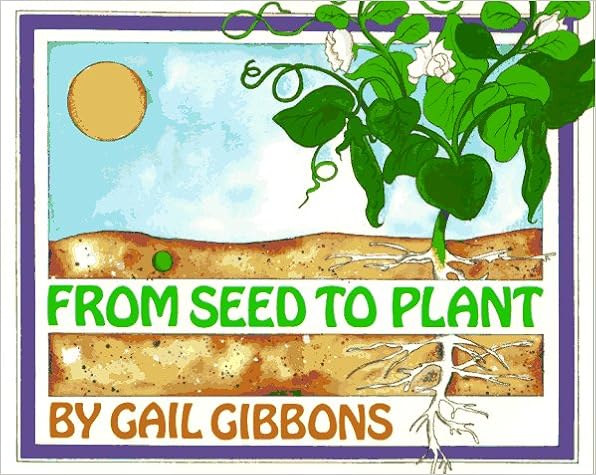
"From Seed to Plant" by Gail Gibbons
Here's a nice book to help you out:
"From Seed to Plant" by Gail Gibbons
Have fun!
Friday, March 10, 2017
Craft: Easter or Spring Equinox Painted Pinecones
Can you feel spring approaching? To me, spring means color, and actually crafting with my kids because we can do it outside where cleanup is easier.
March 20th (2017) is the spring equinox!
Easter Sunday will be April 16th (2017)!
This time of year I'm always picking up pine cones and raking (oh, joy...) and one year a friend asked me what I was going to do with them. Um, set them out for yard trash pickup? Obviously? We had tried to do some crafts with pine cones in the past and found that they were too, well, pokey! Peanut butter and bird seed works pretty well, but what else could you possibly...
 |
| Oh! Paint! My kids love to paint! |
We picked up over a hundred pine cones and ended up painting them all between the "four" of us. I say "four" because one is a toddler and only painted parts of hers. As you do.
TIP: Wash and dry the pine cones to get rid of bugs and dirt. The pine cones will close up like this first:

Dry them in the oven or microwave to open them up again:
TIP: Wash and dry the pine cones to get rid of bugs and dirt. The pine cones will close up like this first:
Dry them in the oven or microwave to open them up again:
 |
| Cleanest Pine Cones in the Universe. |
Our most successful method (pictured at the top of the post) uses tempera / whatever kid paint you have and sponges. Sponging was SO easy and we hardly noticed the sharp bits. Go ahead and glop that paint on if you're using tempera. For a quick project, you can skip washing and drying the pine cones and use washable paints. For a more crafty, durable project, wash, dry, and use acrylic paint and a finishing clear poly coat. (Did you know you are also supposed to wash and dry acorns before painting them?)
Sponging also worked best for "snow" pine cones!
 |
| They look even better in person! |
If you want these to hang outside, you will want to use a spray sealer. When we did this, some of our paint dissolved -- disappeared right off the pine cone!
Now... you are probably wondering about spray painting the pine cones to begin with. That is actually what we did first because my oldest can operate spray cans and I thought that would be the best method. The spray paint then turned into "my" project to touch up what he had started, and another run to the store for more glitter paint. So, while the final product does look nice, it was a lot harder and cost 5 times as much because where we used only a little of the regular liquid paint, we used up four entire bottles of glitter spray paint. The pine cones kept moving around while I was trying to spray them and I felt more like I was attacking them than painting them.
 |
| They have a beautiful silver glitter finish ranging from a light dusting to "did you dip that?" |
 |
| The red looks more impressive in person but not as nice as the silver. |
If you do go with spray paint, I'd pick silver and maybe gold unless you are going to go really crazy and do a white coat underneath first. At that point you'll be spending several dollars a pine cone!
In hind sight, the sponges were more kid-friendly even though you hold the pine cones to do it. I'm happy with how all of them turned out but will probably never use spray paint on a pine cone ever again (except maybe to seal it).
To hang them as ornaments, hand-screw in eye screws and tie on ribbon. Or skip all that and lay them in a neat basket or bowl as a center piece.
Let's look at that finished product again...
|
| Perfect for an Easter tree! |
Friday, February 17, 2017
Make Your Own Booklet Project

Hand-sewn Booklet: Make Your Own
It's no secret that we're book lovers and storytellers over here. We've been studying the 7 continents in our homeschool co-op and, as one of the teachers, I've gleefully brought our family's passions to class, introducing the kids to folk tales from each region. Later, I'll post a mega list of all the picture books we've used.
Oceania/Australia presented a unique challenge. For Africa, we chose a particularly hilarious Anansi story and performed a puppet show for my son's presentation at co-op. But for Australia, we struggled to get a hold of picture book at all.
So, we made our own!
I wanted to do a true booklet so my 3rd grader could hand sew it, which he enjoys, and because booklets like this are more durable and feel more like a "real" book than simpler projects. We already had a manual craft drill, a darning needle (they are blunt), and strong thread.
What we do NOT have is a wonderful but expensive program like InDesign to order the pages for easy printing. When you make a booklet, you lay the sheets on top of each other and sew through the middle, so each page becomes two half-sized pages--the numbering can get complicated. I've made pdfs and docs with blank, numbered pages ready to print using standard programs like Word and Open Office. Get them along with instructions and other booklet project ideas on my teacher pay teacher site to Make Your Own Booklet.
You could staple it if you don't want to sew it, but for us, the sewing is half the fun.
For Australian mythology, we used the story of Crow Steals Fire, broke it down into plot points, and rewrote it in my son's words using his illustrations. He enjoyed retelling the story and sewing the book, so we'll be doing more booklet projects in the future!
Have fun!
Subscribe to:
Posts (Atom)